
Sub-Total: $0.00
1040 Tax Schedules
Understanding your tax return starts with knowing which schedules apply to your financial situation. While not every taxpayer files every schedule, each one serves a specific purpose for reporting income, deductions, taxes, or credits. Below is a simple overview of the most common Form 1040 schedules and what they are used for.
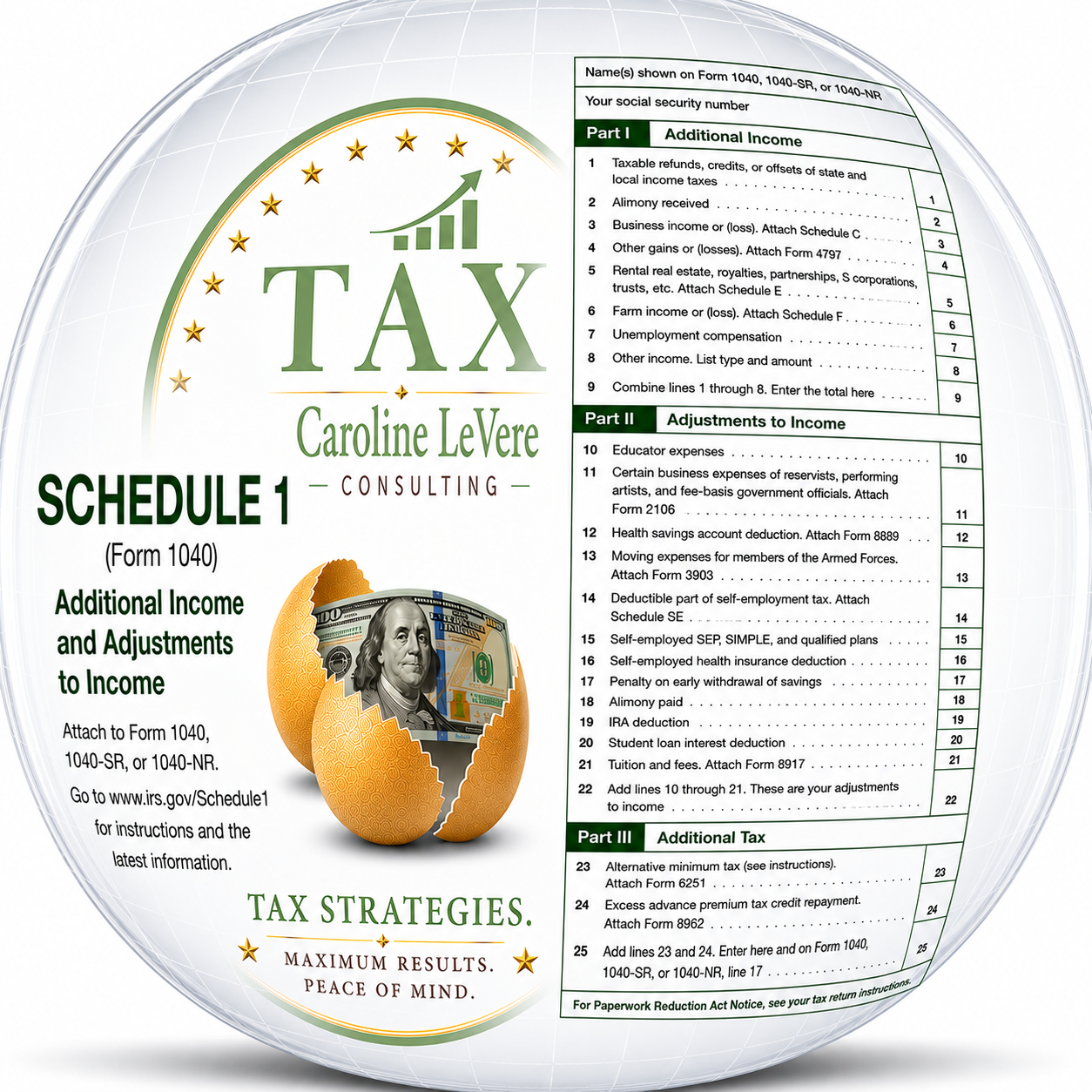
Schedule 1
Additional Income & Income Adjustments
Schedule 1 is used to report additional sources of income that are not reported directly on Form 1040, such as unemployment compensation, gambling winnings, or certain business income. It is also used to claim adjustments to income, including deductible student loan interest and other qualifying adjustments.
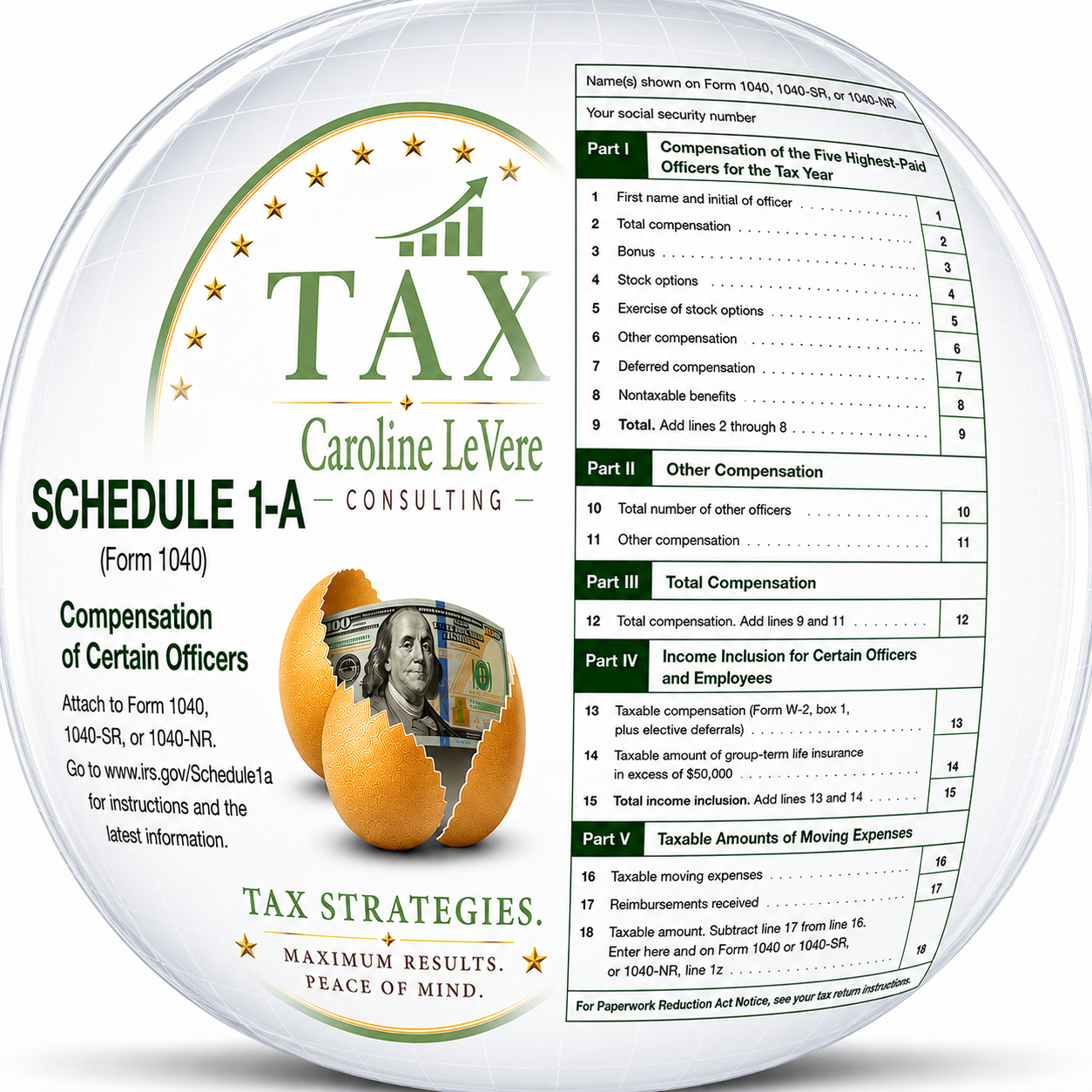
Schedule 1-A
Additional Federal Deductions
Schedule 1-A covers newer federal deductions available to eligible taxpayers. These may include deductions for qualified tips, eligible overtime pay, and qualified vehicle loan interest, depending on current tax law and eligibility requirements.
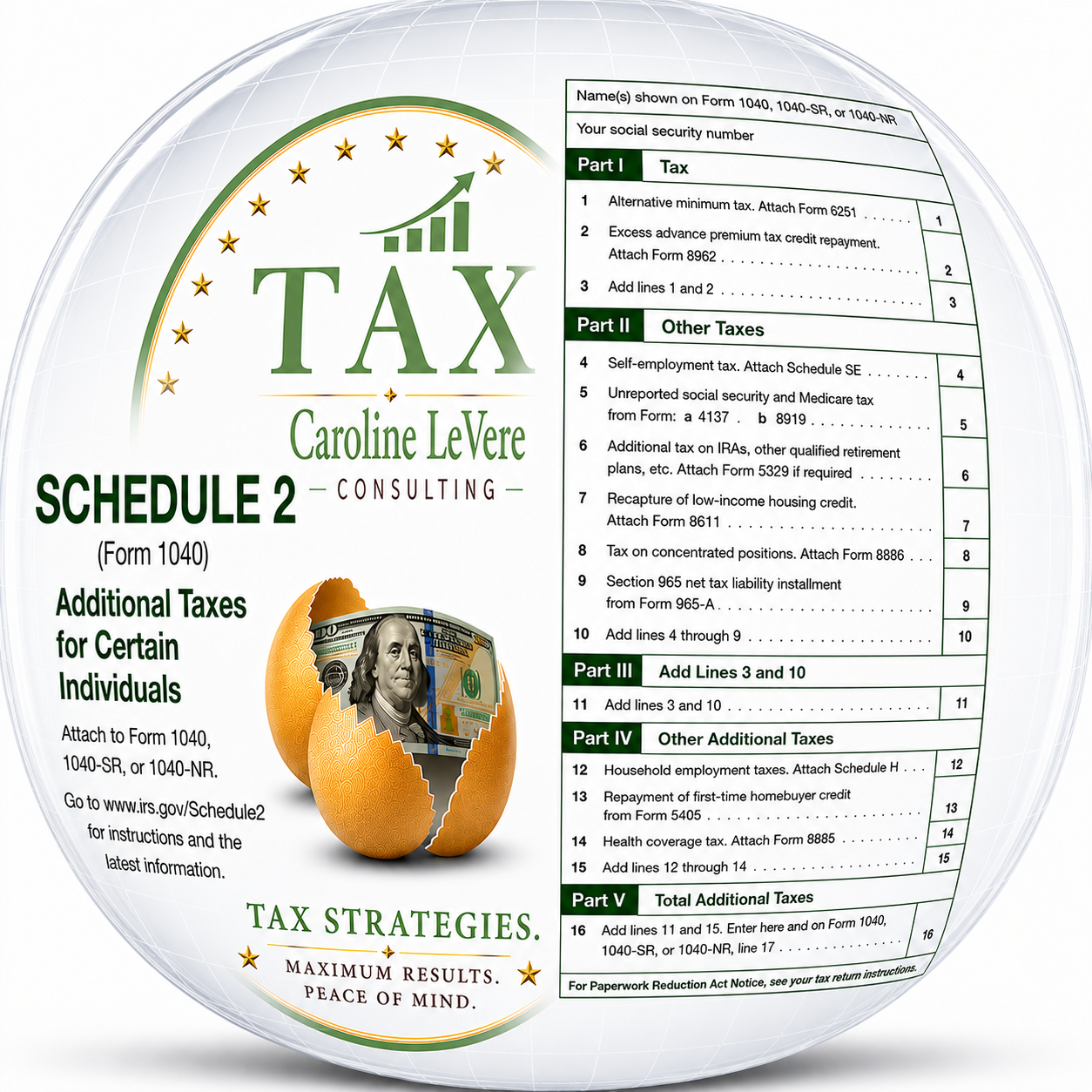
Schedule 2
Additional Taxes
Schedule 2 is used when you owe taxes that are not calculated directly on Form 1040. This commonly includes self-employment tax, alternative minimum tax (AMT), and certain other federal tax liabilities.
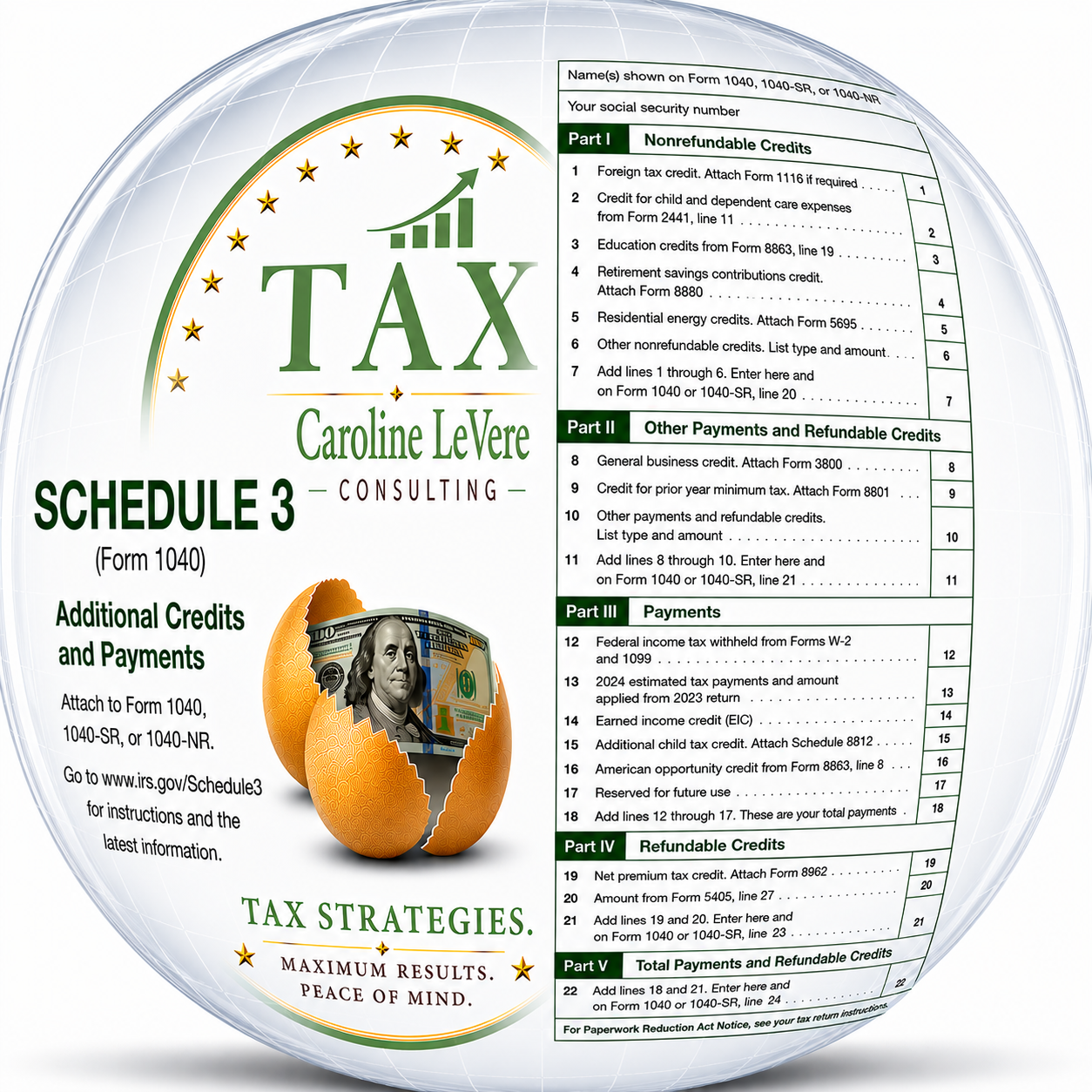
Schedule 3
Tax Credits & Other Payments
Schedule 3 allows taxpayers to claim various non-refundable and refundable tax credits, along with certain additional payments that help reduce overall tax liability.
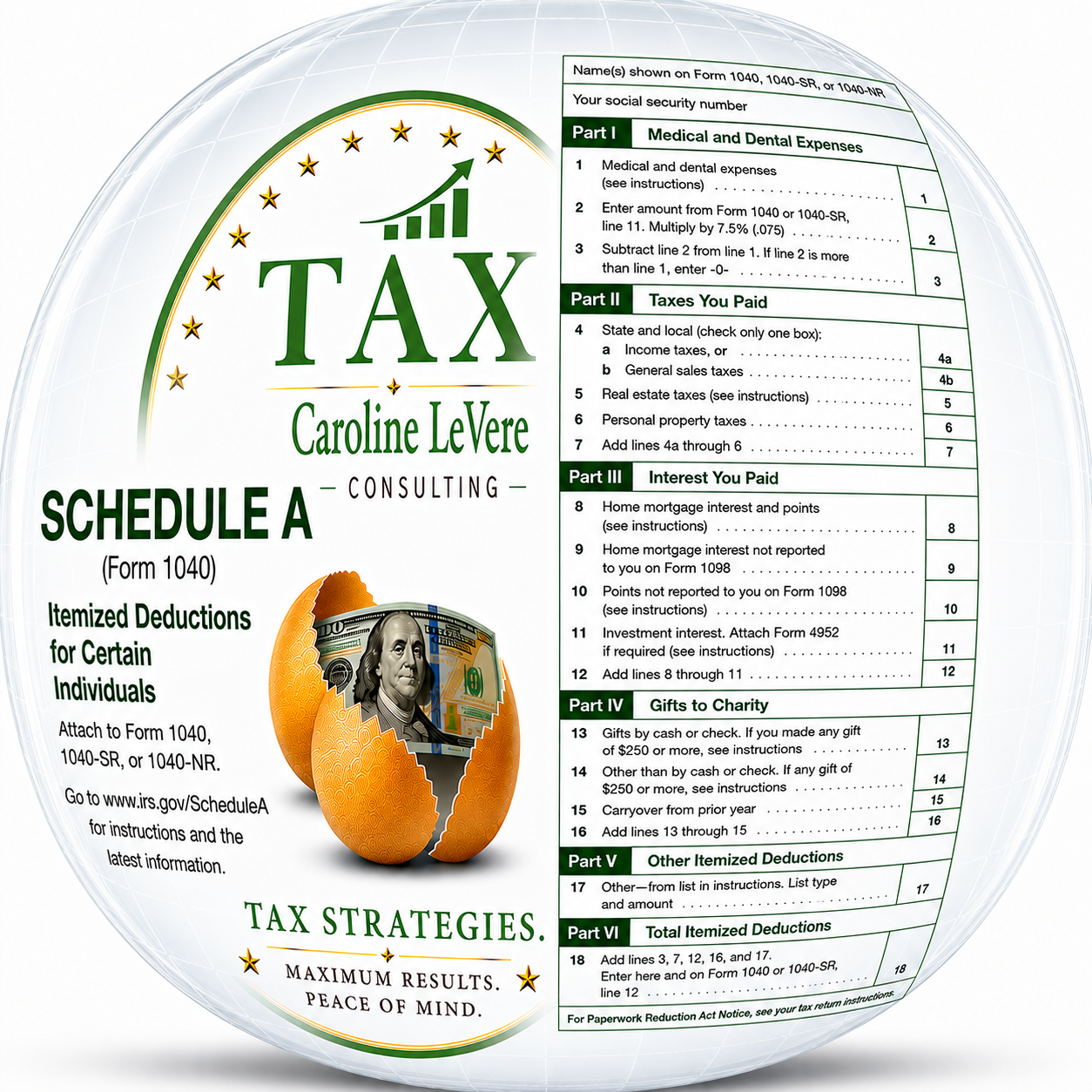
Schedule A
Itemized Deductions
Schedule A is used by taxpayers who choose to itemize deductions instead of taking the standard deduction. Common itemized deductions include qualified medical expenses, mortgage interest, state and local taxes, and charitable contributions.
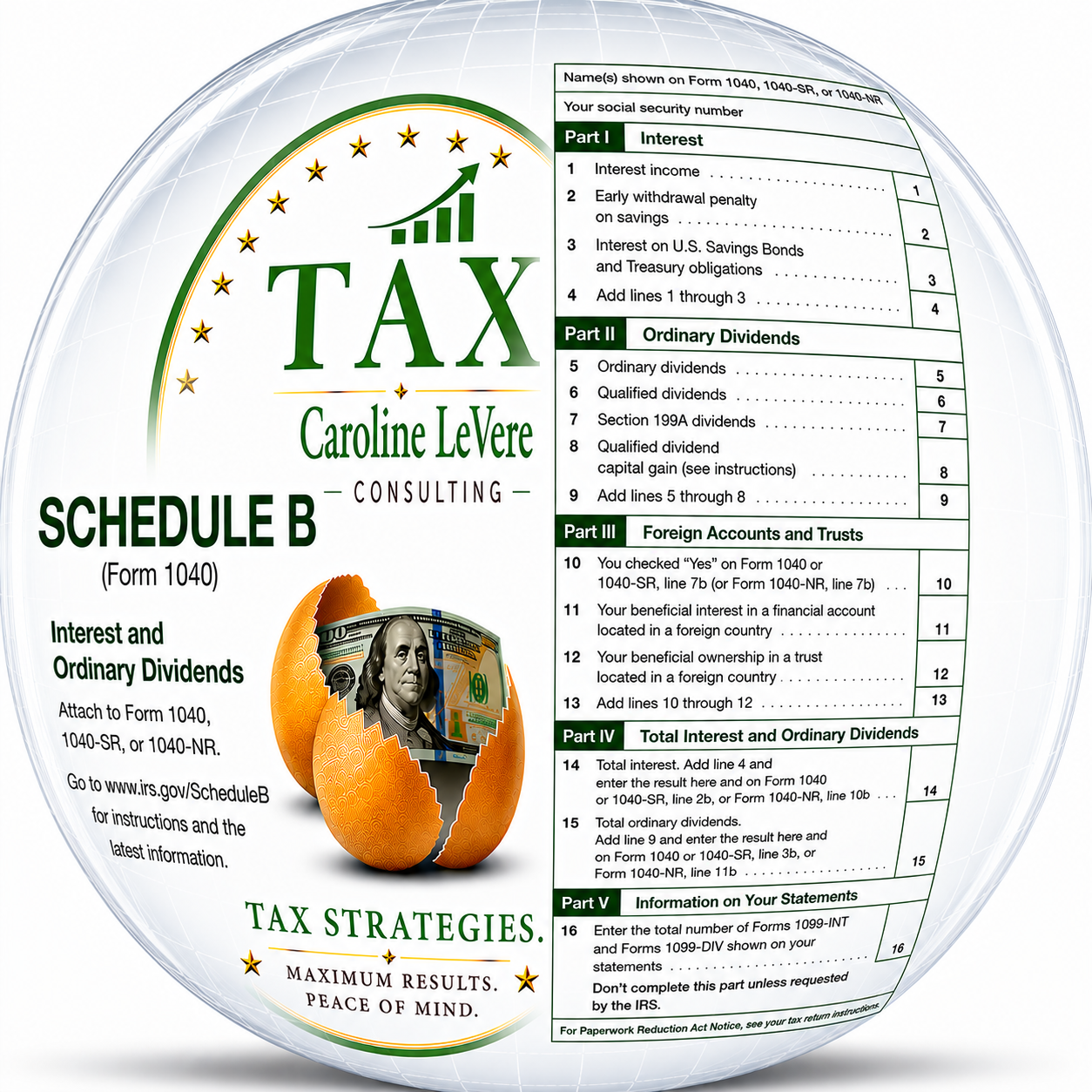
Schedule B
Interest & Dividend Income
Schedule B is required when your ordinary dividends or taxable interest exceed IRS reporting thresholds. It provides additional details about investment income received during the tax year.
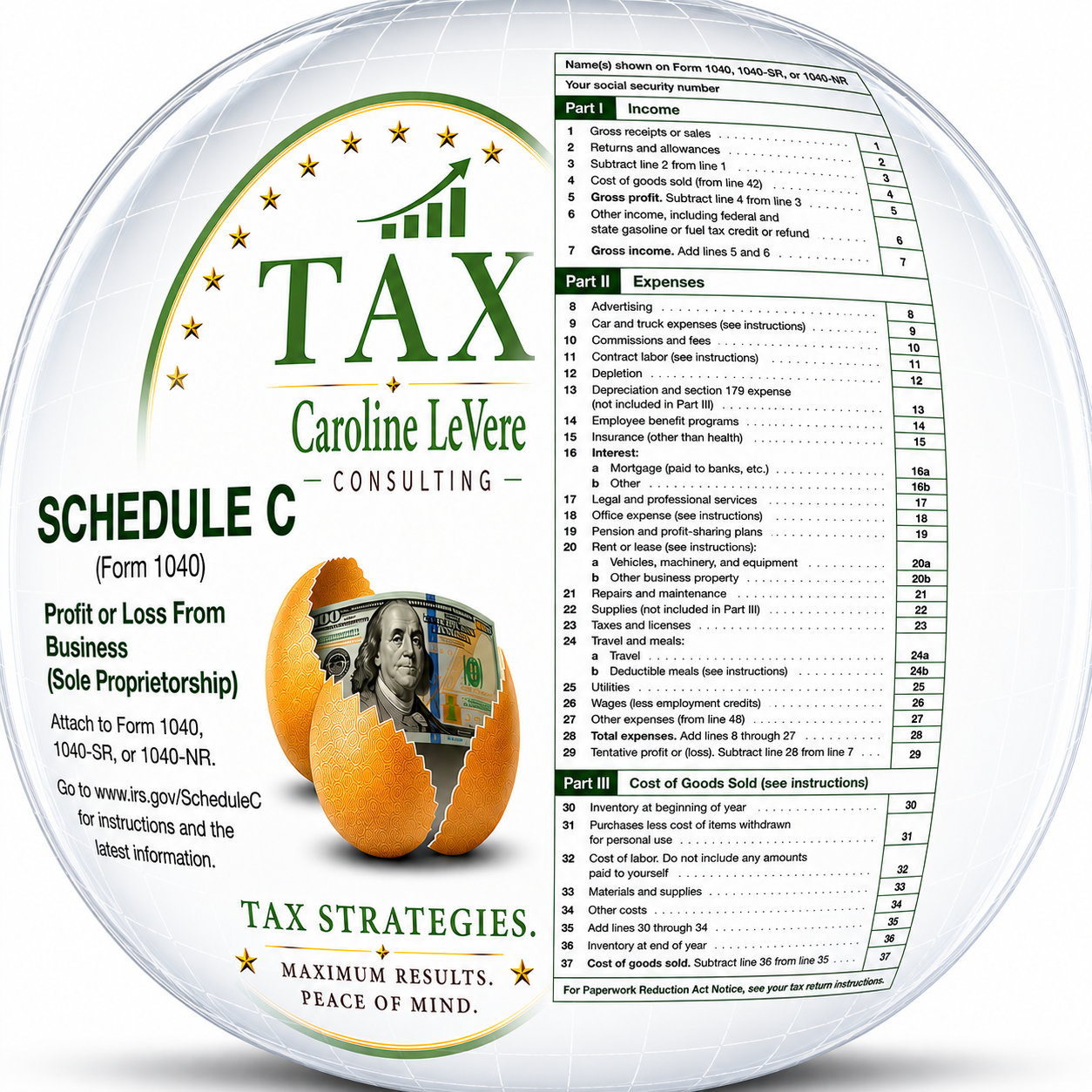
Schedule C
Business Profit or Loss
Schedule C is filed by sole proprietors and self-employed individuals to report income and expenses from their business. It determines the net profit or loss that is reported on the taxpayer's individual return.
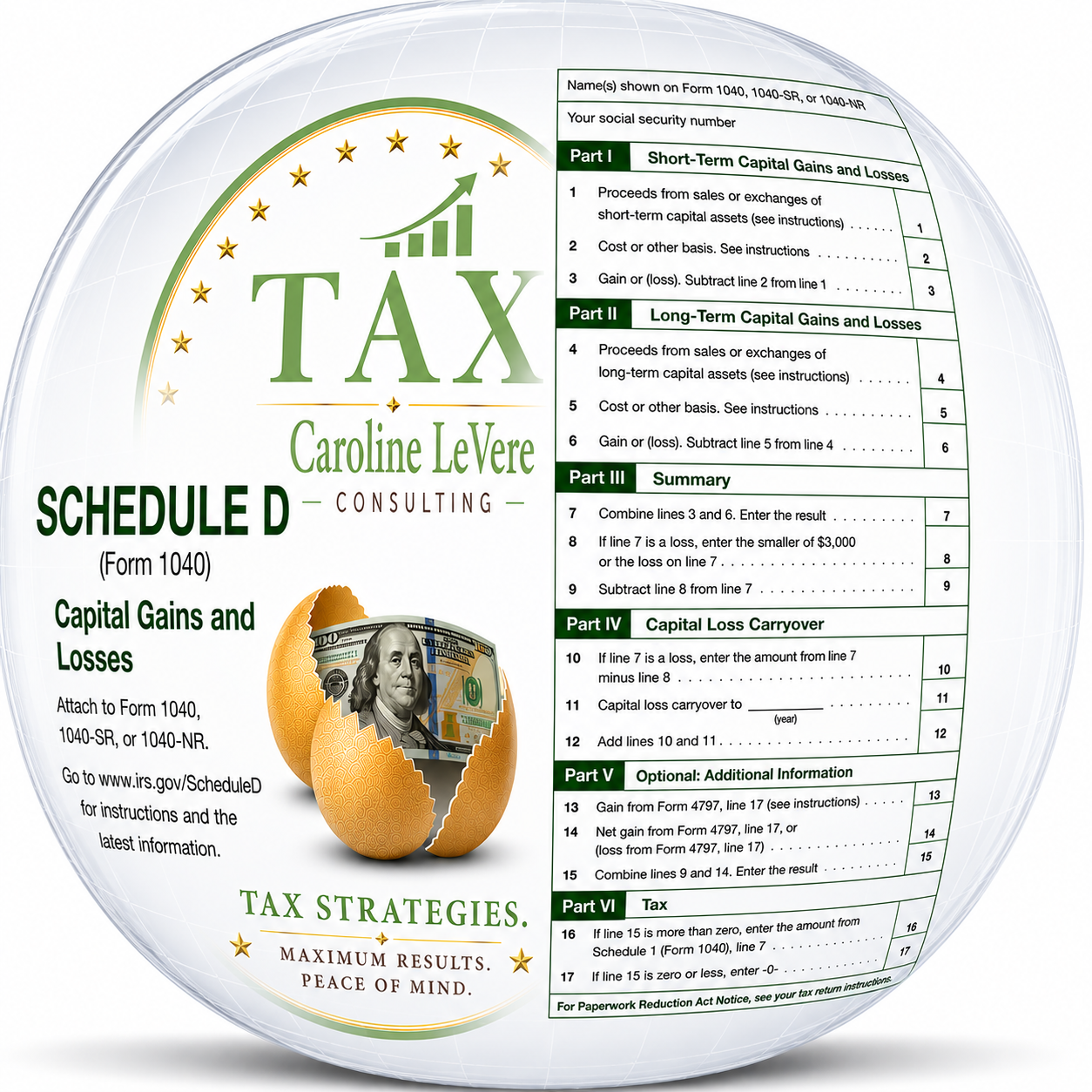
Schedule D
Capital Gains & Losses
Schedule D is used to calculate capital gains and losses resulting from the sale of investments such as stocks, mutual funds, real estate, or other capital assets.
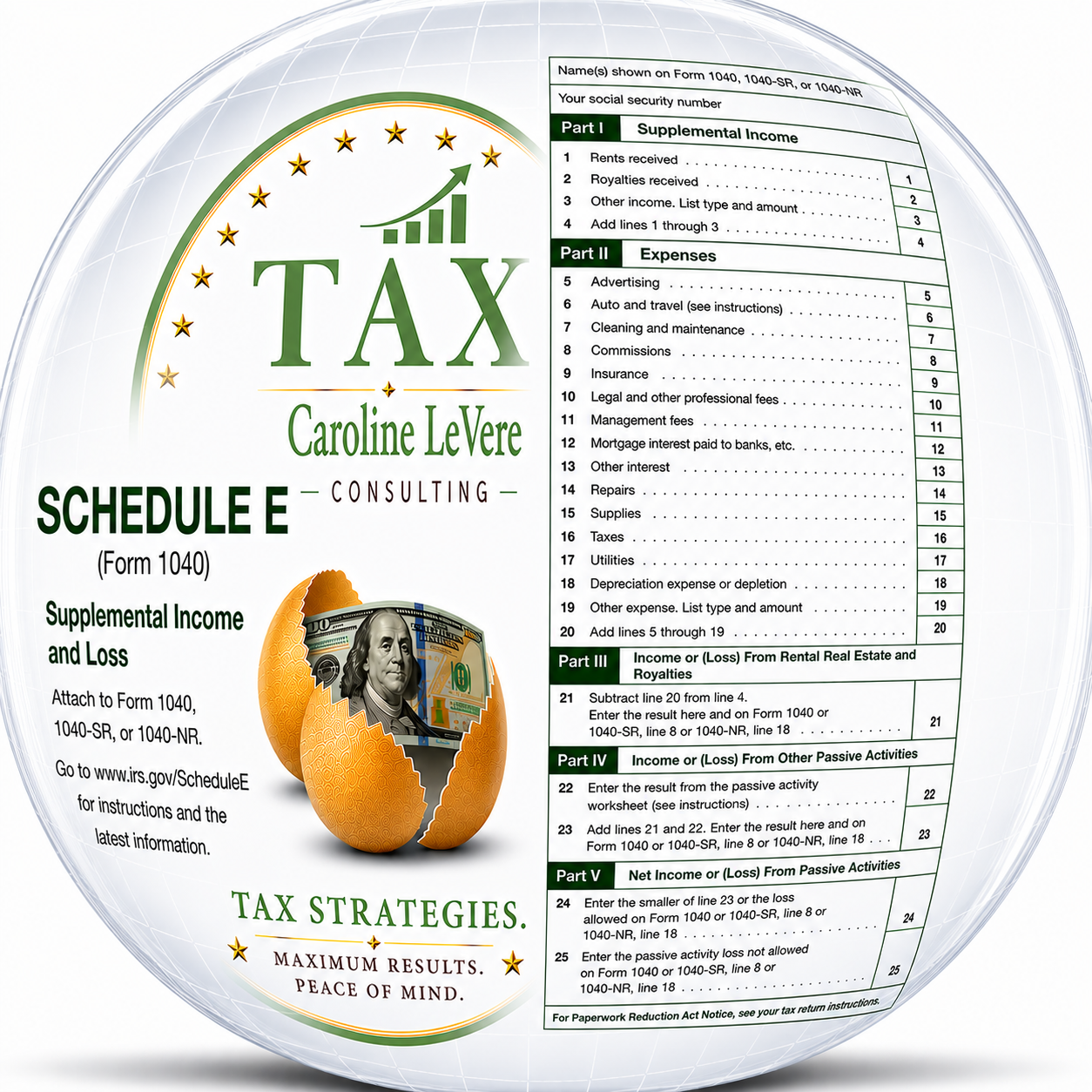
Schedule E
Supplemental Income & Loss
Schedule E reports income or losses from rental properties, royalties, partnerships, S corporations, estates, and trusts. It helps determine how supplemental income is reported on your federal tax return.
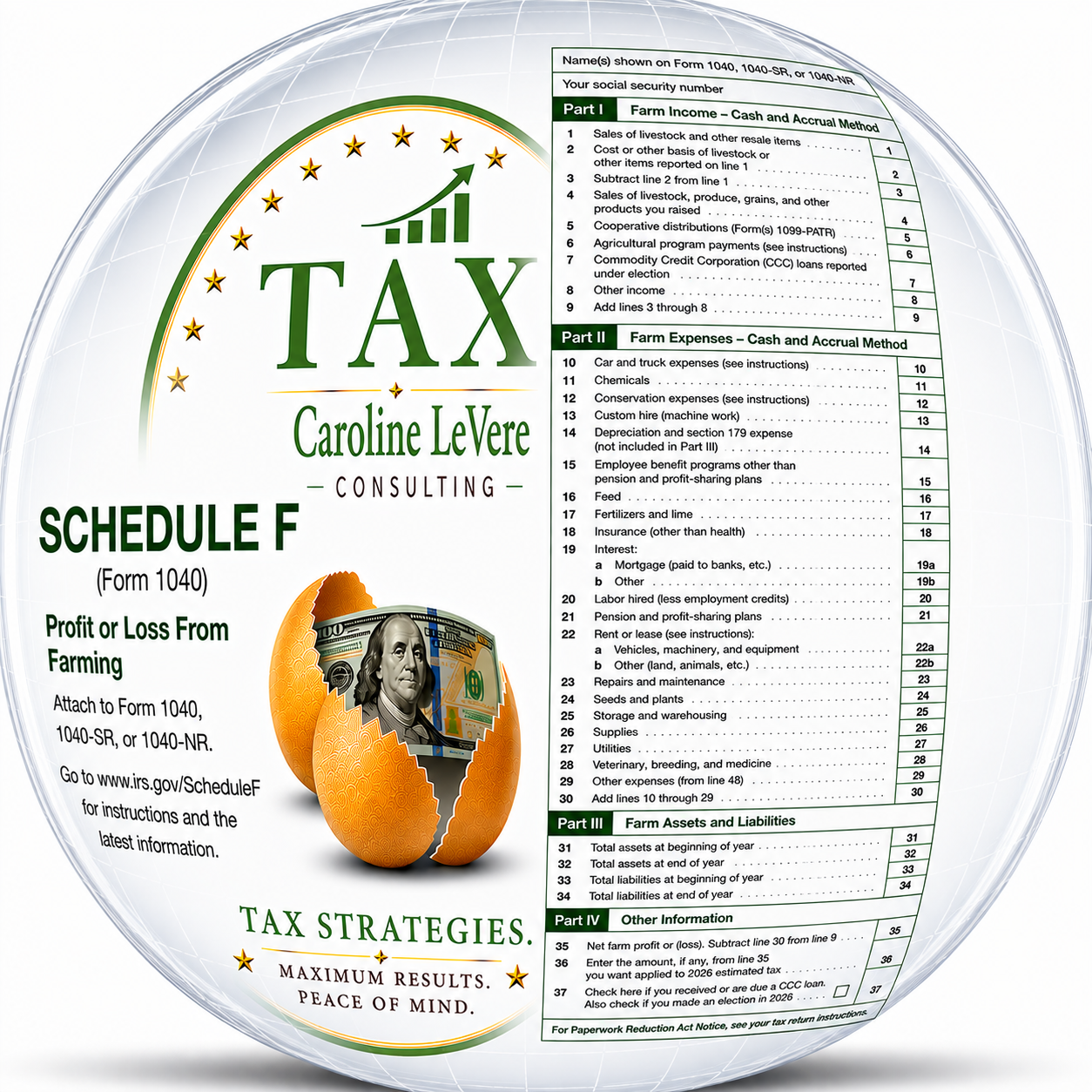
Schedule F
Reports profit or loss from farming, calculating net farm income and tracking agricultural expenses.
Need Help Determining Which Schedules Apply?
Every tax situation is unique, and filing the correct schedules is essential for an accurate return. Caroline LeVere Consulting provides professional tax preparation and guidance to help individuals, families, and business owners understand their filing requirements and maximize available tax benefits.